Why Teeth Often Feel More Sensitive for a Few Days After a Dental Cleaning
Quick Answer: Temporary tooth sensitivity after a cleaning is common and usually results from the removal of plaque and tartar that had been covering slightly exposed areas near the gumline, briefly exposing those areas to temperature and pressure before the gums and enamel surface readjust — this typically resolves within a few days to about a week and isn’t usually a sign of a problem.
The cleaning went fine, nothing was flagged as concerning, and yet cold water suddenly feels sharp for the next several days — that reaction is a known, common, and generally short-lived side effect of the cleaning process itself.

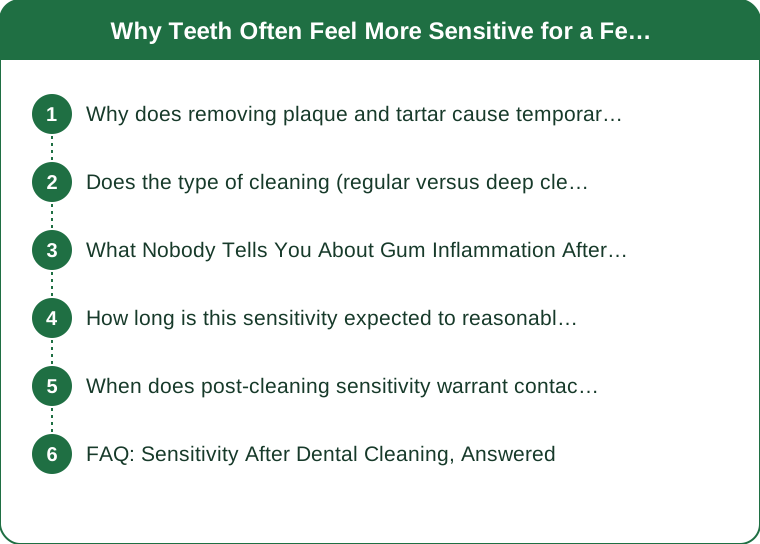
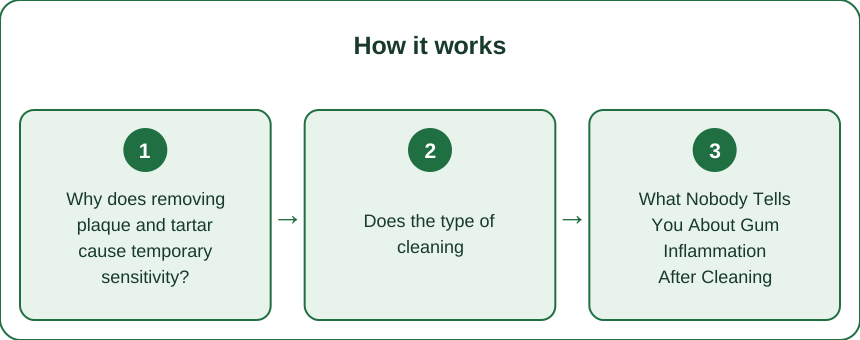
Why does removing plaque and tartar cause temporary sensitivity?
Built-up plaque and tartar, especially near the gumline, can act as an unintentional barrier covering areas of the tooth root or slightly receded gum tissue that would otherwise be exposed, and thorough cleaning removes this buildup along with whatever insulating effect it was providing, briefly exposing those areas directly to temperature and pressure changes until the tissue adjusts and any minor gum inflammation from the cleaning itself settles down.
Does the type of cleaning (regular versus deep cleaning) affect sensitivity level?
Yes — a deep cleaning (scaling and root planing), which involves cleaning below the gumline and is more involved than a routine cleaning, tends to produce more noticeable and sometimes longer-lasting sensitivity than a standard routine cleaning, since it addresses more significant buildup and involves more direct work near sensitive root surfaces.
What Nobody Tells You About Gum Inflammation After Cleaning
Most explanations focus on exposed tooth surfaces, but nobody tells you that the cleaning process itself, even when done gently and correctly, causes mild, temporary inflammation of the gum tissue similar to minor irritation from any dental instrument contact, and this inflammation independently contributes to sensitivity for a few days, separate from and in addition to any newly exposed tooth surface.

How long is this sensitivity expected to reasonably last?
For most people, sensitivity following a routine cleaning resolves within a few days to about a week as gum tissue settles and the tooth surface adjusts, while sensitivity following a more involved deep cleaning may reasonably last a bit longer, up to a couple of weeks, before it should be meaningfully improving.
When does post-cleaning sensitivity warrant contacting the dentist?
Sensitivity that’s severe, worsening rather than gradually improving, or persisting well beyond the typical one-to-two week window is worth mentioning to the dental office, since this pattern can occasionally indicate something separate from normal post-cleaning adjustment, like an underlying cavity or gum issue that happened to become more noticeable after the cleaning revealed it.
FAQ: Sensitivity After Dental Cleaning, Answered
Are there products that help manage sensitivity in the days following a cleaning?
A toothpaste formulated for sensitive teeth, used for a week or two following the appointment, is commonly recommended and can meaningfully reduce discomfort while the tissue settles.
Should brushing be avoided or softened right after a cleaning?
Gentle brushing with a soft-bristled brush should continue as normal, though avoiding overly aggressive brushing pressure, particularly near the gumline, is a reasonable precaution while any temporary sensitivity resolves.
Is it normal for gums to feel slightly tender or bleed a little right after cleaning?
Mild, brief tenderness or very minor bleeding immediately after a cleaning is common and generally resolves within a day or two; ongoing bleeding beyond that window is worth mentioning at a follow-up.
TL;DR:
- Removing plaque and tartar can briefly expose previously covered, sensitive tooth surfaces
- Mild, temporary gum inflammation from the cleaning process itself also contributes to sensitivity
- Deep cleanings tend to cause more noticeable and sometimes longer-lasting sensitivity than routine ones
- Sensitivity typically resolves within days to about a week; worsening or prolonged sensitivity is worth a follow-up
This is general information, not medical advice — a dentist can evaluate any sensitivity that feels unusual. A few sensitive days after a cleaning is a known, common, and generally short-lived response, not a sign the cleaning went wrong.
Keep Reading
This article is for general informational purposes only and is not medical advice. Always consult a qualified health professional for guidance specific to you.