Does Tongue Scraping Actually Help With Bad Breath, or Is It a Waste of Time?
Quick Answer: Yes, tongue scraping can meaningfully reduce bad breath because a large share of odor-causing bacteria live on the tongue’s surface, not just between teeth. Brushing alone often misses this bacterial coating, especially toward the back of the tongue.
You brush, you floss, you still catch a whiff of your own breath by mid-afternoon. The missing piece for a lot of people isn’t a stronger mouthwash — it’s the part of the mouth that toothbrushes are genuinely bad at cleaning: the tongue.

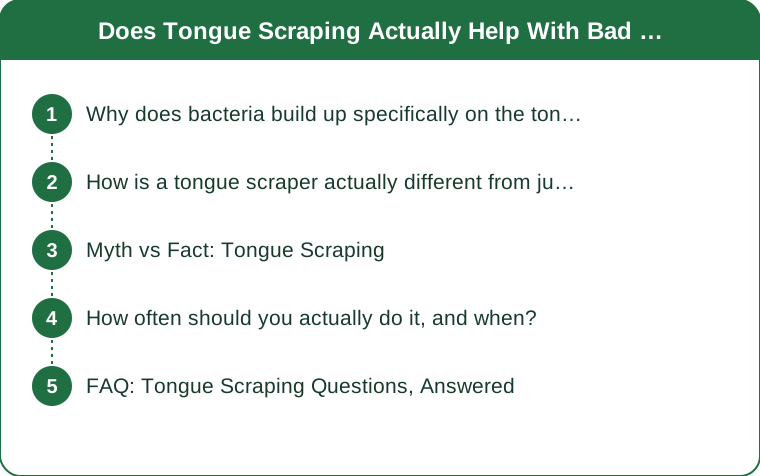
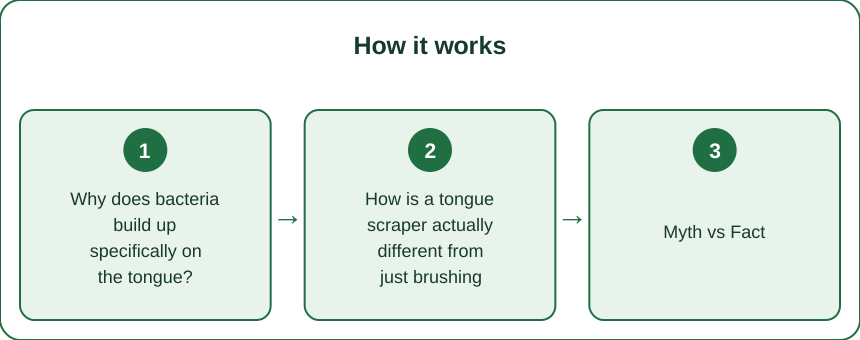
Why does bacteria build up specifically on the tongue?
The tongue’s surface is covered in tiny papillae — small bumps that create a textured landscape perfect for trapping food particles, dead cells, and bacteria. This buildup is what creates that white or yellowish coating you sometimes see, and it’s a major contributor to volatile sulfur compounds, the actual chemical culprits behind bad breath.
A toothbrush glides over this textured surface without fully reaching into the grooves, which is why brushing your tongue with a toothbrush helps some, but a dedicated scraper reaches more of that bacterial layer in one pass. The coating also tends to build up more overnight, which is exactly why morning breath is often noticeably worse than breath later in the day even without eating anything in between.
How is a tongue scraper actually different from just brushing your tongue?
A scraper’s flat edge applies consistent, even pressure across the tongue’s surface, physically lifting the bacterial film off in a single motion rather than pushing bristles around it. Brushing tends to redistribute some of that coating instead of fully removing it, especially with a worn or overly soft toothbrush.
Most people notice a visibly cleaner tongue and less morning breath within the first week of adding a scraper, since the technique targets the exact surface where a large portion of odor-causing bacteria concentrate overnight. Rinsing the scraper under running water between each pass keeps you from just redistributing what you already lifted off back across the tongue’s surface.

Myth vs Fact: Tongue Scraping
Myth: Tongue scraping is just a trendy extra step with no real benefit. Fact: Removing the bacterial coating on the tongue is a genuine, direct way to reduce one of the biggest contributors to bad breath, not just a wellness trend.
Myth: Scraping harder gets better results. Fact: Firm, consistent pressure works better than aggressive scraping, which can irritate the tongue’s surface without improving the actual cleaning.
Myth: You should scrape all the way to the very back in one motion. Fact: Going too far back can trigger a gag reflex — most people get excellent results starting a bit further forward and working back gradually over a few sessions.
How often should you actually do it, and when?
Once daily, in the morning, is the standard recommendation, since bacterial buildup accumulates most overnight while saliva production drops during sleep. Scrape gently from the back toward the front, 3-5 times, rinsing the scraper between passes, before you brush your teeth.
Doing it more than once a day generally isn’t necessary and can occasionally leave the tongue’s surface feeling irritated if overdone — once a day is enough for most people to see a real difference in breath freshness.
FAQ: Tongue Scraping Questions, Answered
Does tongue scraping replace brushing and flossing?
No — it addresses a different surface entirely and should be an addition to, not a replacement for, brushing teeth and flossing between them.
Is a white coating on the tongue always bad breath related?
Usually it’s related to normal bacterial and food debris buildup, but a persistent thick white coating that doesn’t improve with scraping is worth mentioning to a dentist, since it can occasionally signal something else. This is general information, not medical advice.
Metal or plastic tongue scraper — does it matter?
Both work; metal scrapers tend to hold their edge and clean slightly more effectively over time, while plastic is gentler for sensitive tongues and often cheaper to replace regularly.
TL;DR:
- A large share of bad-breath bacteria live on the tongue, not just between teeth
- A dedicated scraper removes that coating more thoroughly than brushing alone
- Scrape once daily, gently, from back to front, before brushing
- It’s an addition to your routine, not a replacement for brushing and flossing
If your breath still bothers you after a solid brushing routine, the tongue is very likely the missing step. This is general information, not medical advice.
Keep Reading
This article is for general informational purposes only and is not medical advice. Always consult a qualified health professional for guidance specific to you.