How to Whiten Your Teeth Without the Sensitivity Wrecking It
Quick Answer: Whitening sensitivity comes from peroxide temporarily opening tiny channels (tubules) in the enamel, and it’s manageable with a potassium nitrate desensitizing toothpaste used for a week before starting, shorter contact times, and skipping a day between sessions rather than whitening daily.
You start a whitening kit motivated and by day 3, cold water sends a jolt through your teeth. Most people either push through miserably or quit halfway with uneven results — there’s a better middle path.
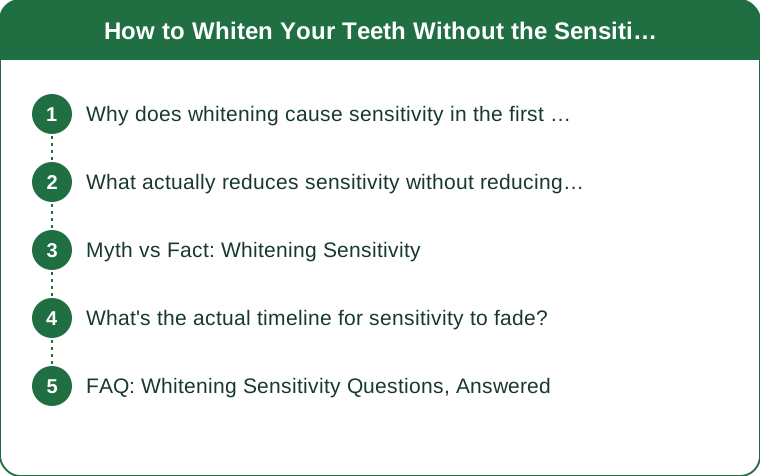
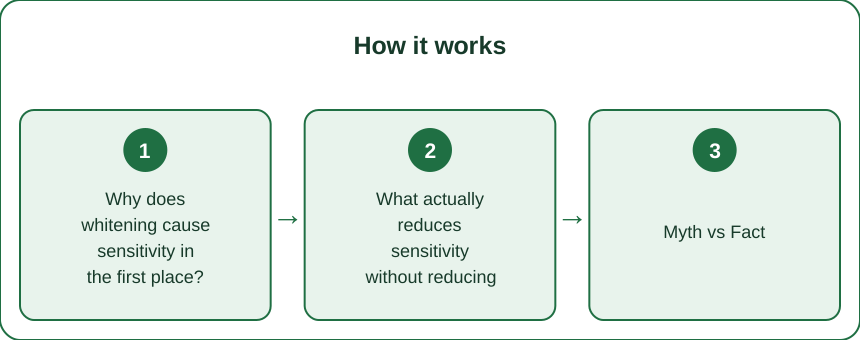
Why does whitening cause sensitivity in the first place?
Peroxide-based whitening agents work by penetrating enamel to break down stain molecules, and in the process they temporarily widen the microscopic tubules that lead to the nerve inside each tooth. That temporary opening is what lets cold, heat, and even air feel sharp for a few days.
It’s not damage in the sense of permanent harm for most people — it’s a temporary, expected side effect of the mechanism, not a sign you’re overdoing it, unless it’s severe or doesn’t fade.
What actually reduces sensitivity without reducing whitening results?
Pre-treat with a potassium nitrate toothpaste for 1-2 weeks before starting — this ingredient works by calming the nerve response inside the tooth, so you go into the whitening period with a head start rather than reacting after pain shows up.
Shorten contact time slightly (if your kit allows a range, use the lower end) rather than skipping sessions — consistent shorter exposures cause less cumulative sensitivity than inconsistent full-length ones.

Myth vs Fact: Whitening Sensitivity
Myth: More sensitivity means it’s working better. Fact: Sensitivity level doesn’t correlate with whitening effectiveness — it’s more about individual enamel thickness and tubule exposure than treatment strength.
Myth: You should push through every scheduled day even if it hurts. Fact: Skipping a day between sessions when sensitivity spikes gives tubules time to partially reseal, and doesn’t meaningfully slow your overall results — most kits’ ‘daily’ schedules assume average tolerance, not a fixed requirement.
Myth: Sensitivity means permanent enamel damage. Fact: For typical over-the-counter whitening used as directed, sensitivity resolves within days of stopping. Genuine enamel damage is a different, much less common issue tied to overuse or pre-existing enamel erosion.
What’s the actual timeline for sensitivity to fade?
Most people notice sensitivity peaking around day 2-4 of a treatment course and fading within 24-72 hours after stopping, faster with a desensitizing toothpaste in rotation. If sensitivity is still sharp a week after stopping entirely, that’s outside the typical pattern and worth a dental check rather than more waiting.
A useful frame: mild-to-moderate sensitivity that fades between sessions is normal. Sensitivity that’s building session over session without any relief is a signal to pause the whole treatment, not just push through with painkillers.
FAQ: Whitening Sensitivity Questions, Answered
Can I still drink coffee or cold water during a whitening course?
Yes, but expect brief discomfort with very hot or cold items during active treatment days. Room-temperature drinks are the easiest workaround during the sensitive window.
Do whitening strips or trays cause more sensitivity?
Trays with a stronger, longer-contact gel often cause more sensitivity than lower-concentration strips, though results also tend to be faster — it’s a real tradeoff, not a free upgrade.
Should I stop whitening entirely if I have naturally sensitive teeth?
Not necessarily — pre-treating with desensitizing toothpaste for 2 weeks before starting often makes whitening tolerable even for already-sensitive teeth. If you have existing enamel erosion or exposed dentin, check with a dentist before starting. This is general information, not medical advice.
TL;DR:
- Sensitivity comes from temporarily opened tubules, not damage, for most typical use
- Pre-treat with potassium nitrate toothpaste 1-2 weeks before starting
- Skip a day between sessions if sensitivity spikes — it doesn’t meaningfully slow results
- Sensitivity should fade within days of stopping; if it doesn’t, get it checked
Manage the sensitivity instead of pushing through it, and you’ll actually finish the treatment with better, more even results.
Keep Reading
This article is for general informational purposes only and is not medical advice. Always consult a qualified health professional for guidance specific to you.