Should You Brush Before or After Your Morning Coffee?
Quick Answer: Brush before the coffee, or wait thirty to sixty minutes after it. Coffee is acidic, and acid temporarily softens the mineral surface of enamel; brushing during that window scrubs softened enamel with an abrasive paste, which over years contributes to permanent wear. Brushing first also strips away the overnight plaque that coffee pigments cling to, so the before order actually reduces staining too. The one genuinely bad option is the one most people default to: coffee first, brush immediately after, out the door.
Same two tasks, same ten minutes. The order is the whole game.

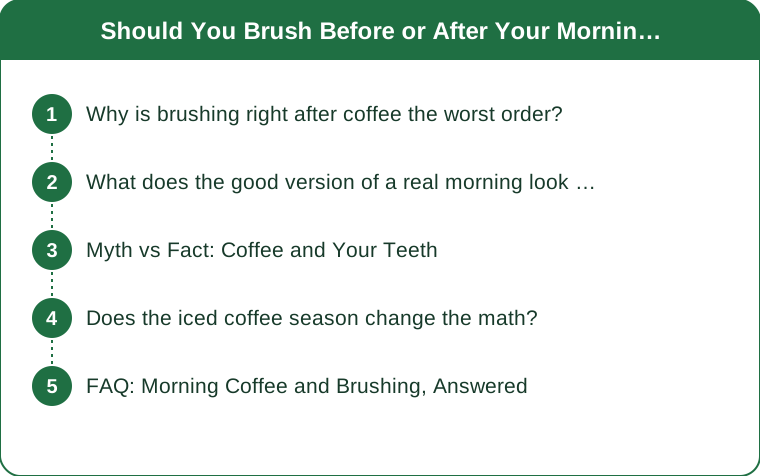
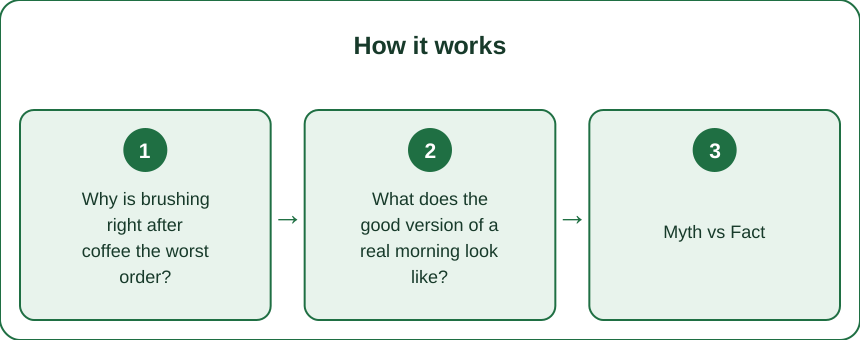
Why is brushing right after coffee the worst order?
Because you are scrubbing enamel at the exact moment it is least able to take it.
Coffee sits around pH 5 — mildly acidic, roughly in the territory of tomato juice. That is nowhere near soda, but it is enough that the outermost layer of enamel demineralizes slightly on contact: mineral leaves the surface and the enamel is temporarily softened. This is a normal, recoverable event. Saliva is a repair system, bathing the surface in calcium and phosphate and re hardening it over the next thirty to sixty minutes.
The problem is what happens if a toothbrush arrives during the soft window. Toothpaste is deliberately abrasive — that is partly how it cleans — and abrasion plus softened enamel equals wear that does not come back. Enamel does not regenerate. Each individual morning removes an invisible amount; the habit, run daily for a decade, is one of the contributors dentists see behind thinned, sensitive, yellow tinted teeth. The yellowing is not stain — it is the darker dentin underneath showing through thinner enamel.
Brushing before coffee sidesteps the entire mechanism, and adds two bonuses.
Coffee stains stick to plaque and buildup far more readily than to clean enamel. Brushing first removes the film the pigments grab, which means measurably less staining from the same cup.
Fluoride toothpaste leaves the surface more acid resistant for the encounter that follows. You are effectively waxing the car before the storm instead of after it.
The morning breath argument settles itself — the mouth you wanted to fix was the pre coffee one anyway.
What does the good version of a real morning look like?
Wake, brush, then coffee whenever you like — and a couple of small habits around the cup do the rest.
Brush within the first stretch after waking, before breakfast and coffee. This clears the overnight bacterial film at the moment it is thickest and puts fluoride on board before the day’s first acid.
After the coffee, rinse with plain water. A swish moves the acidic residue along and speeds the return to neutral. It is the single easiest upgrade in this whole article.
If you want to brush after breakfast instead, wait thirty to sixty minutes after the last acidic thing — coffee, orange juice, fruit. The saliva needs that long to re harden the surface. A stick of sugar free gum during the wait accelerates it by driving saliva flow.
Keep the coffee to a sitting, not a three hour drip. Enamel handles discrete acid events well and constant ones poorly. A cup finished in twenty minutes is one demineralization and one recovery; the same cup nursed until noon holds the surface in the softened zone all morning. This is the real argument against the eternally topped up desk mug.
Once the cup is done, be done — or at least switch to water. And if your coffee is really a milkshake with syrups, the sugar is doing more damage than the acid, and the sipping rule matters double.
None of this requires giving anything up. It is the same coffee, the same brush, rearranged.

Myth vs Fact: Coffee and Your Teeth
Myth: coffee rots your teeth. Fact: black coffee is low in sugar and not strongly acidic, and some research even points to compounds in it that inhibit certain bacteria. The damage attributed to coffee is mostly sugar in the coffee, sipping duration, and the brushing timing mistake — all fixable while keeping the coffee.
Myth: adding milk prevents staining. Fact: milk raises the pH slightly and lightens the color, but the staining pigments are still present and still bind to buildup. Milk helps a little. A clean tooth surface and a water rinse help more.
Myth: whitening toothpaste will undo coffee stains, so the order does not matter. Fact: whitening pastes work largely through stronger abrasives, which is exactly what softened enamel does not need. Using an aggressive paste immediately after coffee combines the two worst inputs in the whole equation.
Myth: iced coffee is gentler on teeth. Fact: temperature does not change acidity, and iced drinks are the ones most often sipped through a whole afternoon, which makes them worse in practice. The straw helps — it routes some of the liquid past the front teeth — but the duration habit matters more than the ice.
Myth: a strong mouthwash right after coffee is a good reset. Fact: a fluoride rinse is fine and useful. But several cosmetic rinses are themselves acidic, and alcohol heavy ones dry the mouth, which slows the saliva repair you were counting on. Plain water is the underrated option.
Myth: cold brew is a marketing gimmick, acid wise. Fact: cold brewing genuinely produces a less acidic cup than hot methods — one of the few coffee trends with a real dental upside.
Does the iced coffee season change the math?
It does, and late summer is exactly when the sipping problem peaks.
The venti iced coffee nursed from 8am to 1pm is the signature drink of August, and from an enamel standpoint it is the least friendly format of the year: acid, often sugar, delivered in a hundred small sips that never let the surface finish recovering. If one habit changes this month, make it this one — drink the cold coffee in a sitting or two, then switch the cup to water. Same caffeine, a fraction of the acid exposure.
Use the straw for iced drinks, positioned past the front teeth. It is a modest effect but a free one, and it also helps with staining on the teeth people see most.
Summer hydration culture has a footnote here too. Sports drinks and flavored sparkling waters carry their own acidity, and a day that runs iced coffee into electrolyte drink into citrus seltzer never gives saliva a quiet stretch to do repairs. Plain water between the interesting drinks is the pattern that lets everything else be fine.
And a calendar note worth acting on: fall is when dental offices fill up — back to school checkups, end of year insurance benefits, holiday prep. If you are due for a cleaning, booking in the next couple of weeks gets you a civilized appointment time and gets any coffee staining professionally polished off before the sweater weather photos.
The standing caveat: this is general information. Sensitivity that is new or worsening, visible enamel wear, gums that bleed beyond a week of good brushing — those are dentist conversations, not internet ones, and sooner is always cheaper than later.
FAQ: Morning Coffee and Brushing, Answered
What if I genuinely cannot stand brushing before coffee?
Then keep your order and add the buffer: finish the coffee, rinse with water, wait thirty to sixty minutes, then brush. The order matters less than never scrubbing inside the soft window.
Does this apply to tea too?
Yes — black tea is comparably acidic and actually stains many people worse than coffee. Green tea is milder on both counts. The same rules cover all of them: discrete sittings, water after, no immediate brushing.
How long does coffee breath last if I brushed before drinking?
The compounds fade within an hour or so, faster with a water rinse or gum. Coffee breath that lingers all day is usually dry mouth plus buildup rather than the coffee itself — which, again, the brush-first order helps.
Is one quick espresso as bad as a big drip coffee?
Better, actually. An espresso is a short, contained acid event with less total liquid washing over the teeth. Duration of exposure drives the damage more than intensity, which is why the all-morning mug loses to the two minute espresso.
TL;DR:
- Coffee’s acidity temporarily softens enamel, so brushing immediately after it scrubs a weakened surface — the one order to avoid.
- Brush before coffee: it removes the film stains cling to and adds fluoride armor, or wait thirty to sixty minutes after.
- Drink coffee in sittings rather than all-morning sips, rinse with water after, and use a straw for iced.
- August’s marathon iced coffees are the peak version of the problem, and fall checkup season is filling calendars now.
Tomorrow morning, just swap the order once — brush, then brew. It costs nothing and your enamel keeps the difference forever.
Keep Reading
This article is for general informational purposes only and is not medical advice. Always consult a qualified health professional for guidance specific to you.