Waking Up With a Tired Jaw: The Night-Grinding Check
Bruxism — night grinding and clenching — works the graveyard shift: you sleep through the whole performance while your jaw runs a masterclass in isometric overexertion. The morning-after signature is readable, the stress link is real, and the dentist has the hardware. The self-check, first.

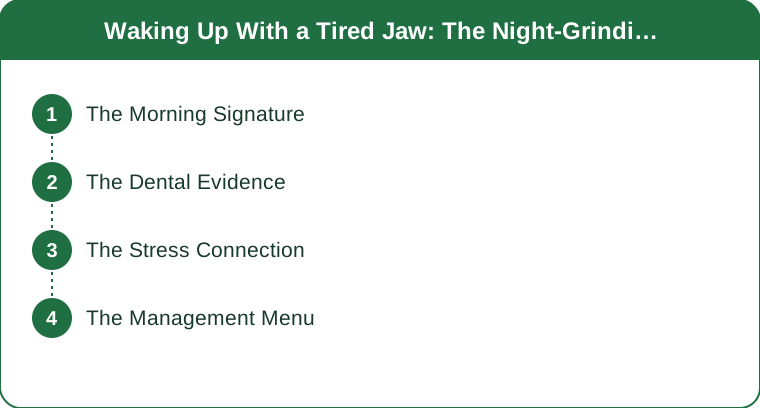
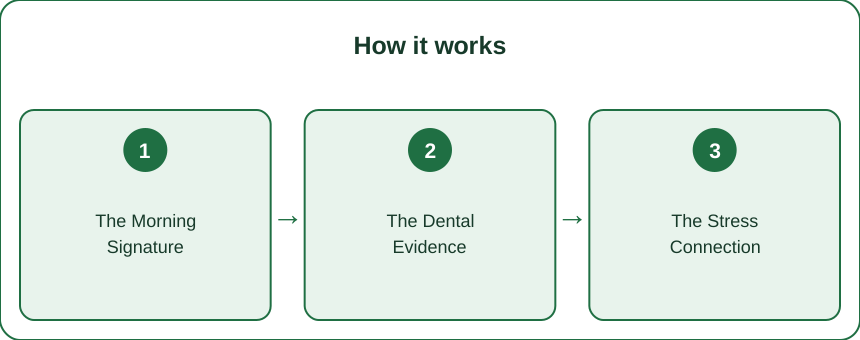
The Morning Signature
The tells on waking: jaw muscles tired or tender (the masseter — cheek-side — worked all night), temple headaches with no other explanation, teeth sensitive without cavities, and the partner’s testimony (grinding is audible; sleepers deny it universally). Two or more: the suspicion has standing.
The Dental Evidence
The dentist reads the longer record: flattened tooth edges, chips and wear facets, scalloped tongue edges and cheek ridges (the clench’s soft-tissue witnesses). This is why the six-month chair matters — bruxism is usually DIAGNOSED there and suspected at home.

The Stress Connection
Grinding tracks stress and disrupted sleep closely — high-load seasons show up in jaws (the cortisol chapters strike again), and daytime clenching (the traffic-jam jaw, the deadline bite) trains the night habit. The daytime awareness cue: lips together, teeth APART — the resting jaw’s actual home position.
The Management Menu
The night guard is the standard hardware (custom beats boil-and-bite for committed grinders — it protects enamel from the habit while other measures address the habit itself), alongside the stress-and-sleep work, the pre-bed jaw massage and warm compress for tender mornings, and caffeine’s evening curfew (stimulants and grinding correlate). The teeth are not renewable; the guard is $300 of insurance on a set you can’t reorder.
Check the morning jaw, ask the dentist to read the edges, un-clench the daytime, guard the night. Bruxism bills quietly for years — the check costs one mirror moment, and the hardware costs less than one crown.
Keep Reading
This article is for general informational purposes only and is not medical advice. Always consult a qualified health professional for guidance specific to you.