Is That Tooth Sensitivity Enamel Erosion or an Actual Cavity?
Quick Answer: Widespread sensitivity to cold, hot, and sweet across many teeth usually points to enamel erosion, while sharp pain localized to one specific tooth is more often a cavity — either way, persistent sensitivity should be checked by a dentist.
Cold water shouldn’t make you wince. When it does, it’s tempting to just switch toothpaste and hope. Here’s how to actually tell what’s going on first.

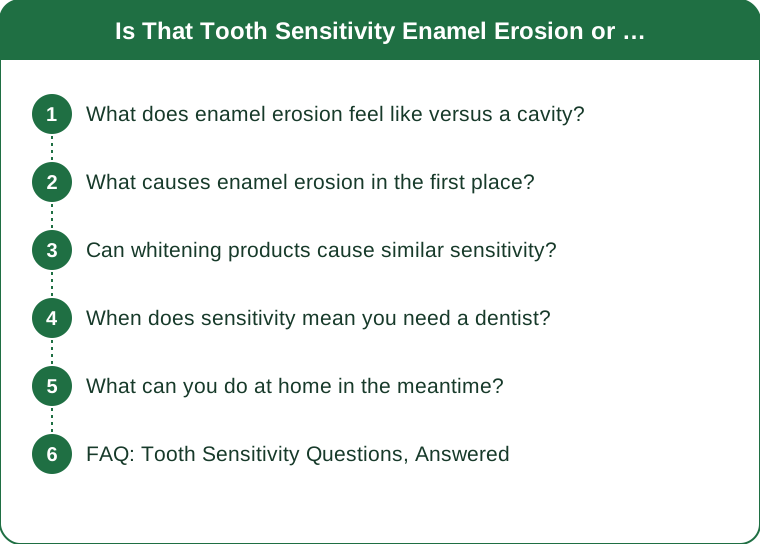
What does enamel erosion feel like versus a cavity?
Enamel erosion typically causes a generalized sensitivity across multiple teeth, often triggered by cold drinks, hot food, or sweets, and tends to develop gradually over months. A cavity, by contrast, usually causes localized, sharper pain in one specific tooth, and can progress to pain that lingers rather than fading quickly after the trigger is removed.
What causes enamel erosion in the first place?
Common causes include frequent acidic food and drink (citrus, soda, wine), acid reflux, and aggressive brushing with a hard-bristled brush. Unlike a cavity, which is caused by localized bacterial activity, erosion is a broader chemical and mechanical wearing-down of the enamel surface across wherever it’s most exposed.
Can whitening products cause similar sensitivity?
Yes — whitening treatments, especially at-home strips or trays, can cause temporary sensitivity by allowing whitening agents to reach the tooth’s inner layers through enamel pores. This sensitivity usually fades within a few days after stopping treatment, which is one way to distinguish it from ongoing erosion or a cavity that won’t resolve on its own.

When does sensitivity mean you need a dentist?
If sensitivity persists beyond two to three weeks, is localized to one tooth, or is accompanied by visible dark spots, pain when biting down, or pain that lingers after the trigger is gone, it’s time for a dental visit rather than waiting it out. Cavities don’t self-resolve, and untreated erosion can progress to needing more invasive treatment.
What can you do at home in the meantime?
Switching to a sensitivity toothpaste with potassium nitrate or stannous fluoride can meaningfully reduce discomfort within a couple of weeks, and cutting back on acidic foods gives enamel a chance to remineralize. Avoid brushing immediately after acidic food or drink — wait at least 30 minutes, since enamel is temporarily softened right after acid exposure.
FAQ: Tooth Sensitivity Questions, Answered
Can eroded enamel grow back?
Enamel itself doesn’t regenerate once lost, but early-stage softening can partially remineralize with fluoride and reduced acid exposure, which is why catching it early matters.
Is sensitivity toothpaste a long-term fix or just a band-aid?
It manages symptoms effectively but doesn’t address an underlying cause like reflux or aggressive brushing, so it works best alongside fixing the root cause.
Should I worry if only cold triggers sensitivity but not heat?
This is common with mild erosion and isn’t automatically alarming, but if it’s new or worsening, it’s still worth mentioning at your next dental checkup.
This is general information, not medical advice — see a dentist for a proper diagnosis of persistent symptoms.
TL;DR:
- Widespread sensitivity often points to erosion, localized sharp pain often points to a cavity
- Acidic food, reflux, and hard brushing are common erosion causes
- Whitening-related sensitivity is usually temporary
- See a dentist if sensitivity lasts more than 2-3 weeks or is localized
Sensitivity is your teeth’s early warning system — worth a quick check rather than a permanent ignore.
Keep Reading
This article is for general informational purposes only and is not medical advice. Always consult a qualified health professional for guidance specific to you.