The Electric Toothbrush Feature Almost Everyone Ignores That's Quietly Damaging Their Gums
Quick Answer: Most mid-range and premium electric toothbrushes include a pressure sensor that flashes or changes sound when brushing force exceeds a safe threshold, but many users habituate to the warning and keep brushing at the same pressure — over months, this contributes measurably to gum recession and enamel wear that a manual brush user might avoid simply from lacking the same motorized force behind their strokes.
The light flashes red almost every session, and it’s become background noise rather than a warning. That’s exactly the habit worth interrupting.

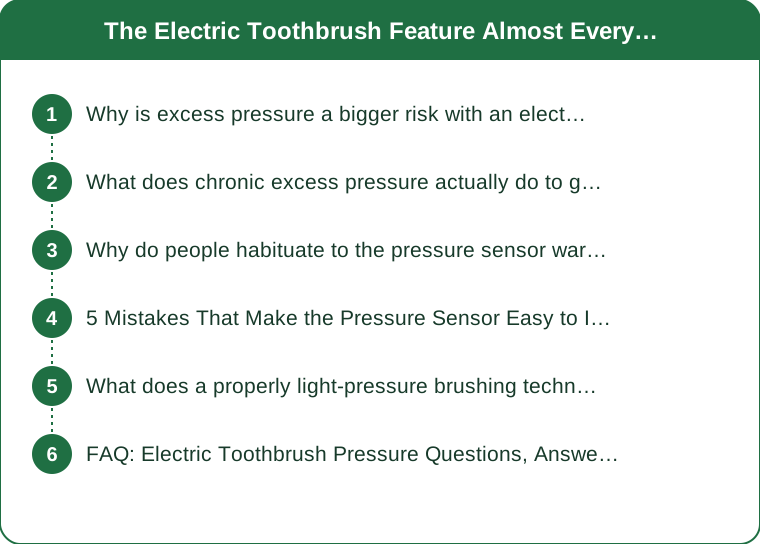
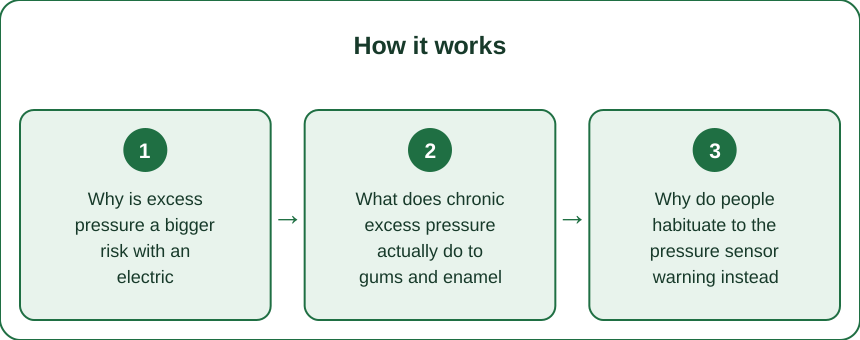
Why is excess pressure a bigger risk with an electric toothbrush than a manual one?
An electric toothbrush already provides the scrubbing motion mechanically, so any additional hand pressure is essentially redundant force layered on top of a device already doing the cleaning work — with a manual brush, pressure and cleaning action are the same motion, so people naturally self-regulate; with an electric brush, that natural feedback loop is disrupted, making it easier to unconsciously push harder than needed without extra cleaning benefit.
What does chronic excess pressure actually do to gums and enamel over time?
Sustained excess brushing pressure is associated with gum recession (the gumline pulling back and exposing tooth root) and enamel abrasion, particularly near the gumline where enamel is naturally thinner, and both effects develop gradually over months to years rather than causing any immediate, obvious symptom — which is part of why the habit is so easy to maintain without noticing consequences until they’re already underway.
Why do people habituate to the pressure sensor warning instead of correcting?
The warning (a flashing light or change in vibration pattern) becomes a familiar, expected part of the brushing routine rather than a genuine alert, especially if it triggers on nearly every session — this is a normal habituation response, similar to tuning out a repeated notification, but it defeats the entire purpose of the feature.

5 Mistakes That Make the Pressure Sensor Easy to Ignore
1. Brushing on autopilot while distracted (phone, TV) rather than paying attention to the brush’s feedback. 2. Assuming the warning is overly cautious rather than a genuine indicator of excess force. 3. Gripping the brush handle tightly, which itself encourages more pressure than a relaxed grip. 4. Never actually adjusting technique after noticing the warning, so it becomes expected background noise. 5. Using an older brush with a worn-out or less sensitive pressure sensor, reducing how noticeable the warning actually is.
What does a properly light-pressure brushing technique actually feel like?
The bristles should be doing the work — the brush head should feel like it’s barely resting against teeth and gums, with almost no felt resistance, rather than being pressed firmly, which feels counterintuitive to anyone used to associating pressure with thoroughness. Practicing this with a completely relaxed grip, letting the motorized motion provide all the cleaning force, is the actual target technique.
FAQ: Electric Toothbrush Pressure Questions, Answered
Is gum recession from brushing pressure reversible?
No, recession itself generally isn’t reversible without a dental procedure, but stopping the excess pressure prevents it from progressing further — catching the habit early meaningfully limits the eventual extent. This is general information, not medical advice.
Does brush head bristle stiffness matter alongside pressure?
Yes — a firm or hard-bristle head combined with excess pressure compounds the risk considerably more than a soft-bristle head, and most dental professionals recommend soft bristles for nearly all users regardless of pressure habits.
How can someone retrain their pressure habit if they’ve been ignoring the sensor for a long time?
Deliberately practicing a few sessions while consciously focused on the brush’s feel rather than multitasking, aiming to keep the pressure sensor from triggering at all, retrains the habit faster than passively hoping to notice it less on autopilot.
TL;DR:
- Electric brushes already provide cleaning motion, making extra hand pressure mostly redundant force
- Chronic excess pressure contributes to gum recession and enamel wear that develop gradually
- Habituating to the pressure sensor warning defeats its entire purpose
- The correct technique feels almost too light — let the motor do the actual work
That flashing light isn’t a design quirk to tune out — it’s one of the few pieces of direct feedback most people get about a habit that otherwise causes damage silently for years.
Keep Reading
This article is for general informational purposes only and is not medical advice. Always consult a qualified health professional for guidance specific to you.