Does Oil Pulling Actually Whiten Teeth, or Is That Mostly a Myth?
Quick Answer: Oil pulling doesn’t meaningfully whiten teeth in the way bleaching-based whitening does — there’s little scientific evidence it removes stain-causing compounds or changes enamel color, though it may modestly reduce oral bacteria and plaque, which can make teeth appear marginally cleaner and brighter as an indirect, secondary effect.

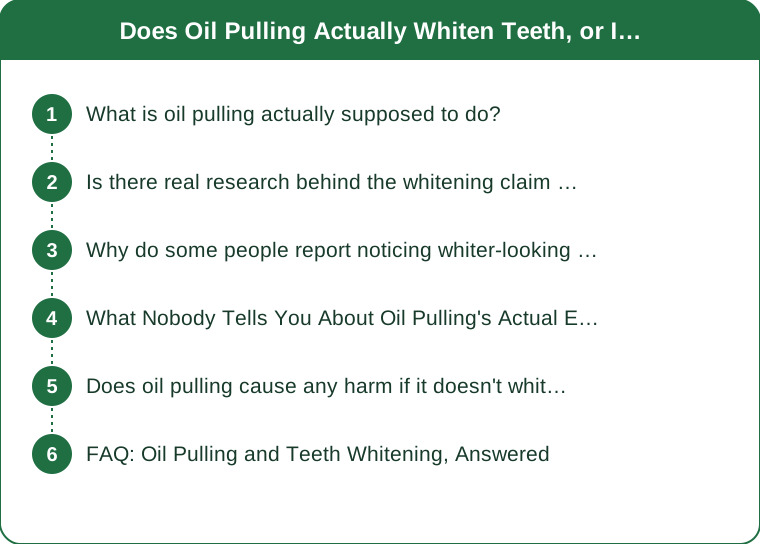
What is oil pulling actually supposed to do?
Oil pulling traditionally involves swishing oil (often coconut or sesame) in the mouth for several minutes, with claimed benefits ranging from reduced bacteria to whiter teeth — the oral bacteria reduction claim has more research support than the whitening claim specifically.
Is there real research behind the whitening claim specifically?
Research specifically measuring tooth color change from oil pulling is limited and doesn’t show a meaningful whitening effect comparable to peroxide-based whitening methods, which work through actual chemical bleaching of stain compounds within the enamel — oil pulling doesn’t have this bleaching mechanism.
Why do some people report noticing whiter-looking teeth after oil pulling?
Reduced plaque and surface bacteria can make teeth appear marginally cleaner and brighter, which some people perceive as whitening, even though the actual enamel color hasn’t chemically changed — it’s more a surface cleanliness effect than a true whitening effect.

What Nobody Tells You About Oil Pulling’s Actual Evidence-Backed Benefit
The stronger evidence for oil pulling relates to modest reductions in oral bacteria and plaque, not whitening — some studies show measurable bacterial reduction comparable to a mouthwash, which is a legitimate oral hygiene benefit distinct from the whitening claim that gets more attention.
Does oil pulling cause any harm if it doesn’t whiten teeth?
Oil pulling is generally low-risk when done as an addition to, not a replacement for, brushing and flossing — the main risk is people using it as a substitute for evidence-backed hygiene practices or actual whitening treatments, missing out on more effective options in the process.
FAQ: Oil Pulling and Teeth Whitening, Answered
How long should oil pulling be done to see any oral hygiene benefit?
Most recommendations suggest swishing for 10-15 minutes, though even shorter durations may provide some bacterial reduction benefit compared to none at all.
Is oil pulling a reasonable replacement for professional whitening?
No — for actual color change, peroxide-based whitening (professional or reputable over-the-counter products) has real evidence behind it, while oil pulling doesn’t work through the same mechanism.
Can oil pulling be combined safely with regular whitening products?
Yes, generally — oil pulling as an oral hygiene addition doesn’t conflict with separately using an evidence-based whitening product, since they work through different mechanisms.
TL;DR:
- Oil pulling doesn’t meaningfully whiten teeth the way peroxide-based whitening does
- Perceived whitening is likely from reduced plaque and surface bacteria, not enamel color change
- The stronger evidence-backed benefit is modest bacterial reduction, similar to mouthwash
- It’s reasonable as an addition to hygiene routines, not a substitute for real whitening or brushing
It’s not harmful, but the whitening reputation outruns what the actual evidence supports.
Keep Reading
This article is for general informational purposes only and is not medical advice. Always consult a qualified health professional for guidance specific to you.